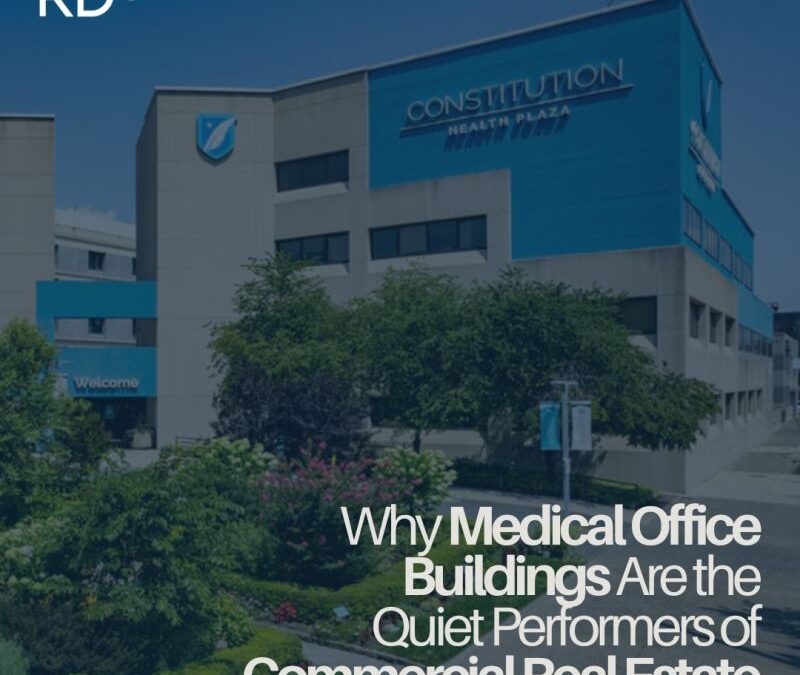
In a commercial real estate landscape where traditional offices continue to face uncertainty, one subsector has quietly but consistently outperformed: medical office buildings (MOBs). While many office properties are still grappling with high vacancy and stagnant demand, MOBs have maintained remarkable stability, and they’re showing no signs of slowing down.
The numbers tell a compelling story. While traditional office vacancy has surged by 500 basis points since early 2020, medical office vacancy has remained relatively flat: just 50 basis points higher than pre-pandemic levels. Not only have MOBs avoided the worst of the downturn, but their occupancy has also outperformed traditional offices for years, with the gap widening significantly in the past five.
Rent growth has also been a bright spot. Since 2020, medical office rent increases have outpaced both traditional office and broader commercial property types.
What’s driving the difference?
Steady demand: Healthcare job growth remains strong, with ambulatory care jobs growing at nearly 4% annually, far outpacing growth in traditional office sectors.
Sticky tenants: Medical providers need physical space and don’t move often. Expensive buildouts and patient access keep them in place long-term.
Disciplined supply: Most MOBs are built near hospitals or in high-traffic areas, which limits oversupply and supports pre-leasing.
Even amid economic uncertainty, the fundamentals for medical offices remain solid. Long leases, strong demand, and strategic locations make this one of the most resilient sectors in commercial real estate today.